AI in Practice
When innovation calls, we drop everything and start coding.
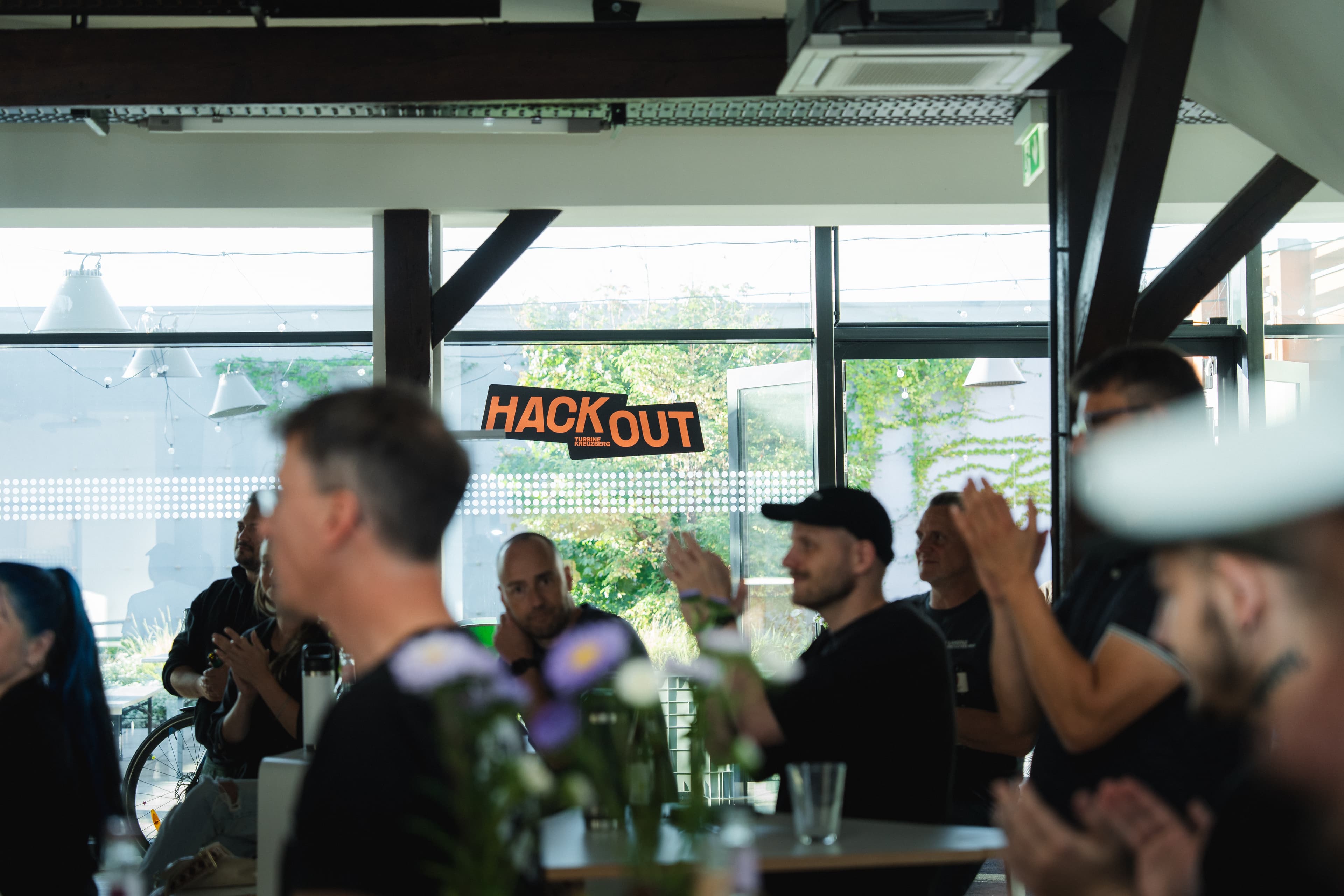
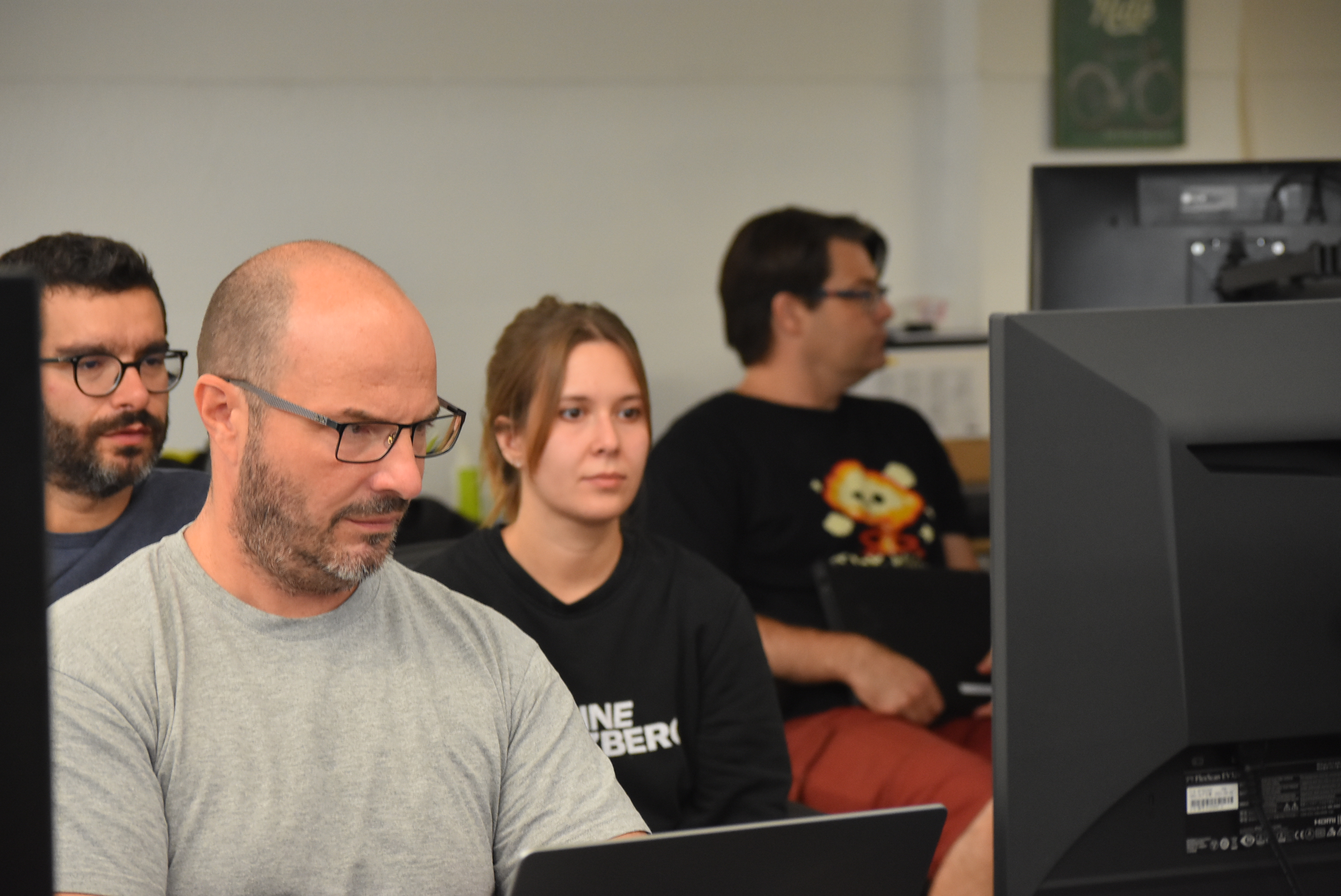
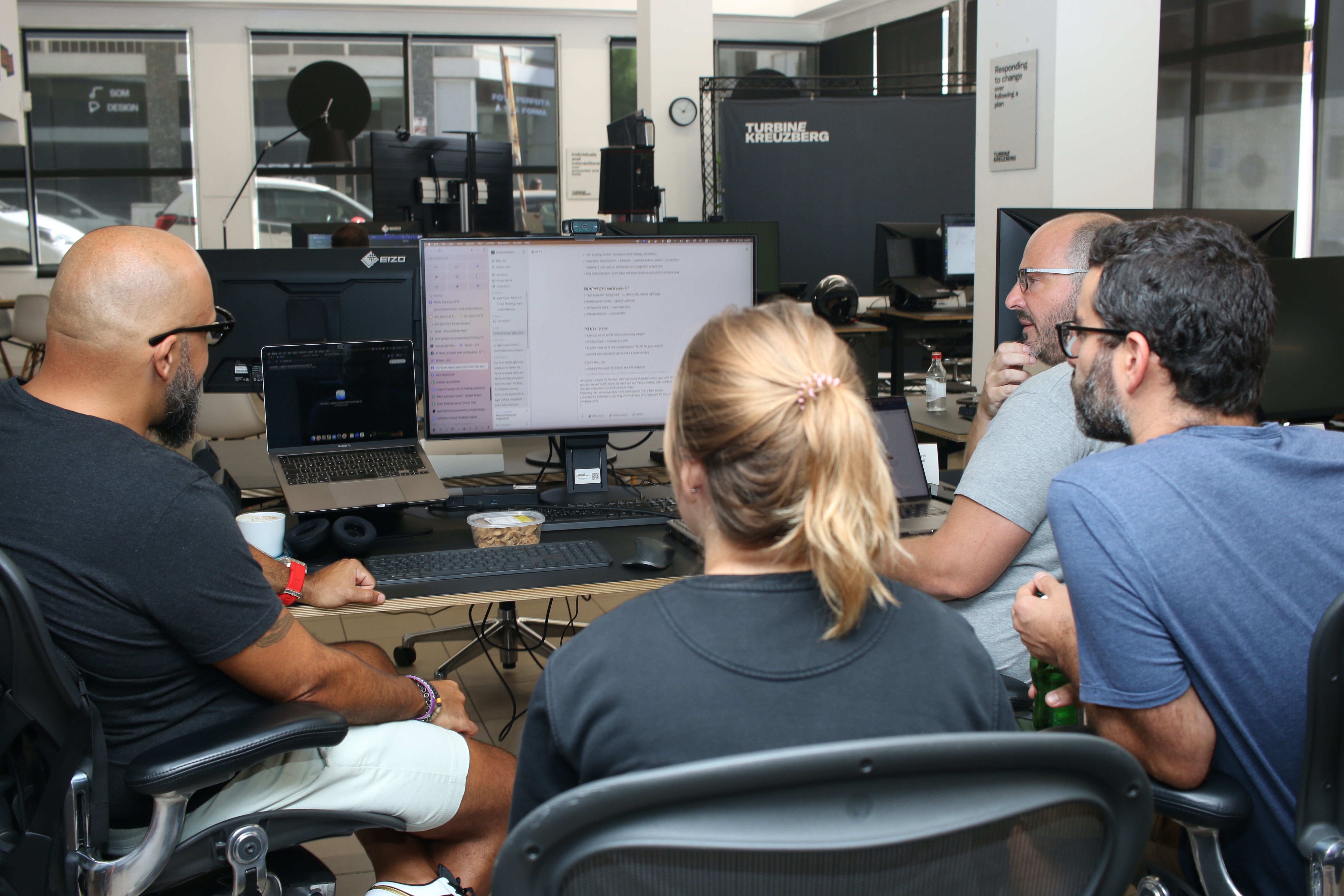
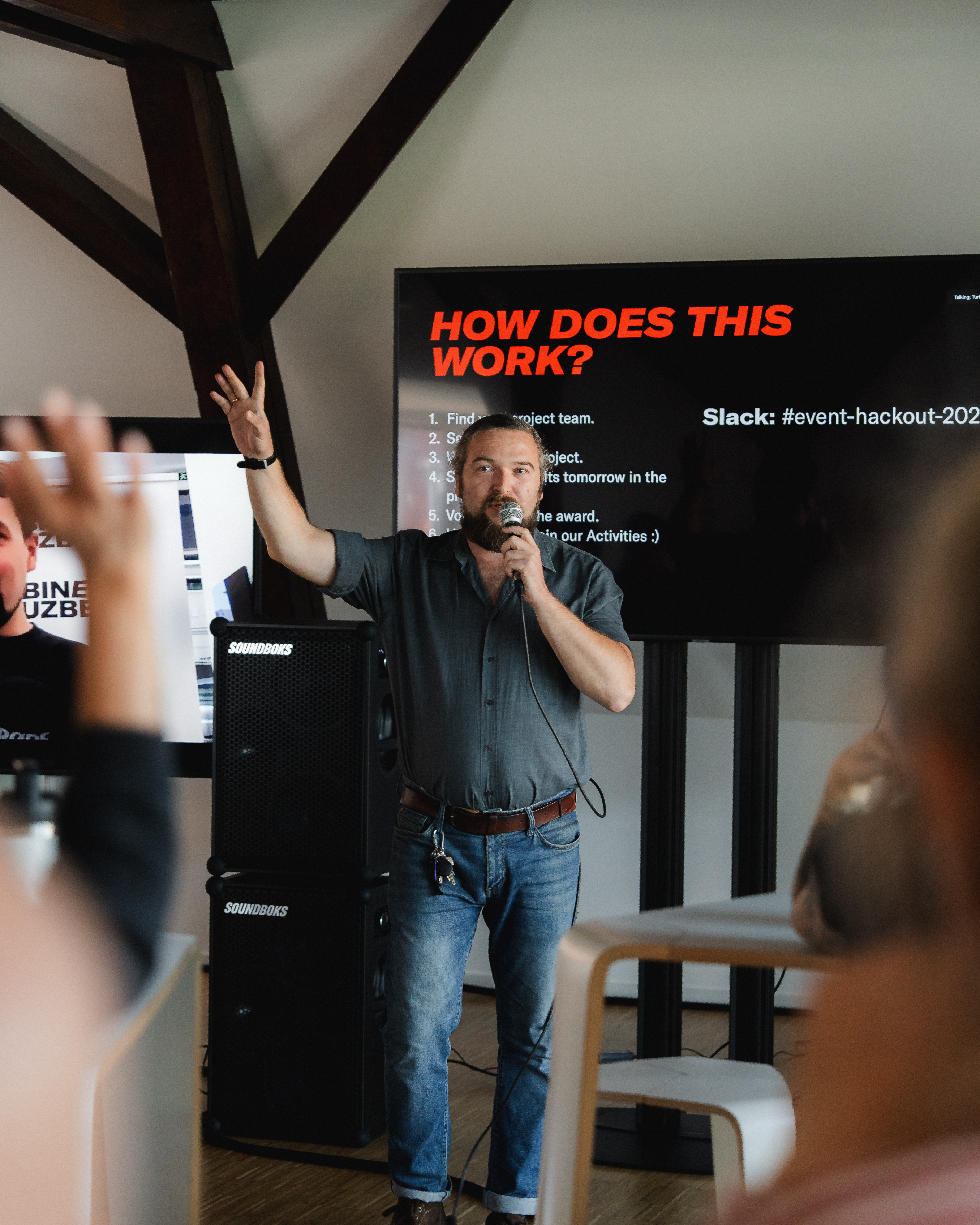
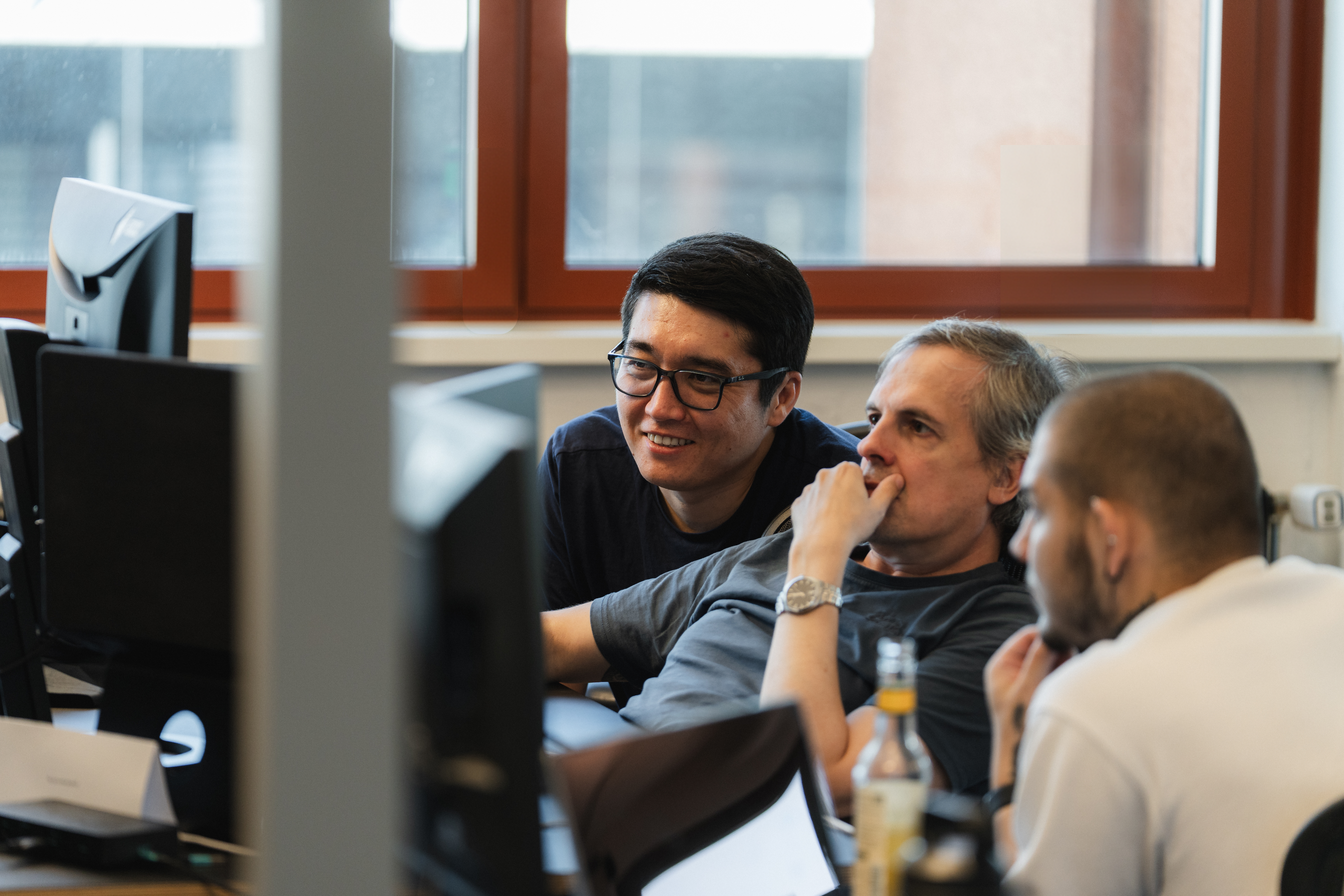
The Hackout is an annual highlight for us at Turbine Kreuzberg. We come together as a team and devote ourselves to in-house projects that are close to our hearts, away from our day-to-day business. This year, we focused on AI in order to experiment freely, independent of our project requirements, to embrace new ideas. Our two locations in Berlin and Faro developed impressive AI concepts within two days, ranging from exciting prototypes to concrete use cases.
Trung Quang Dang / 27.01.2026
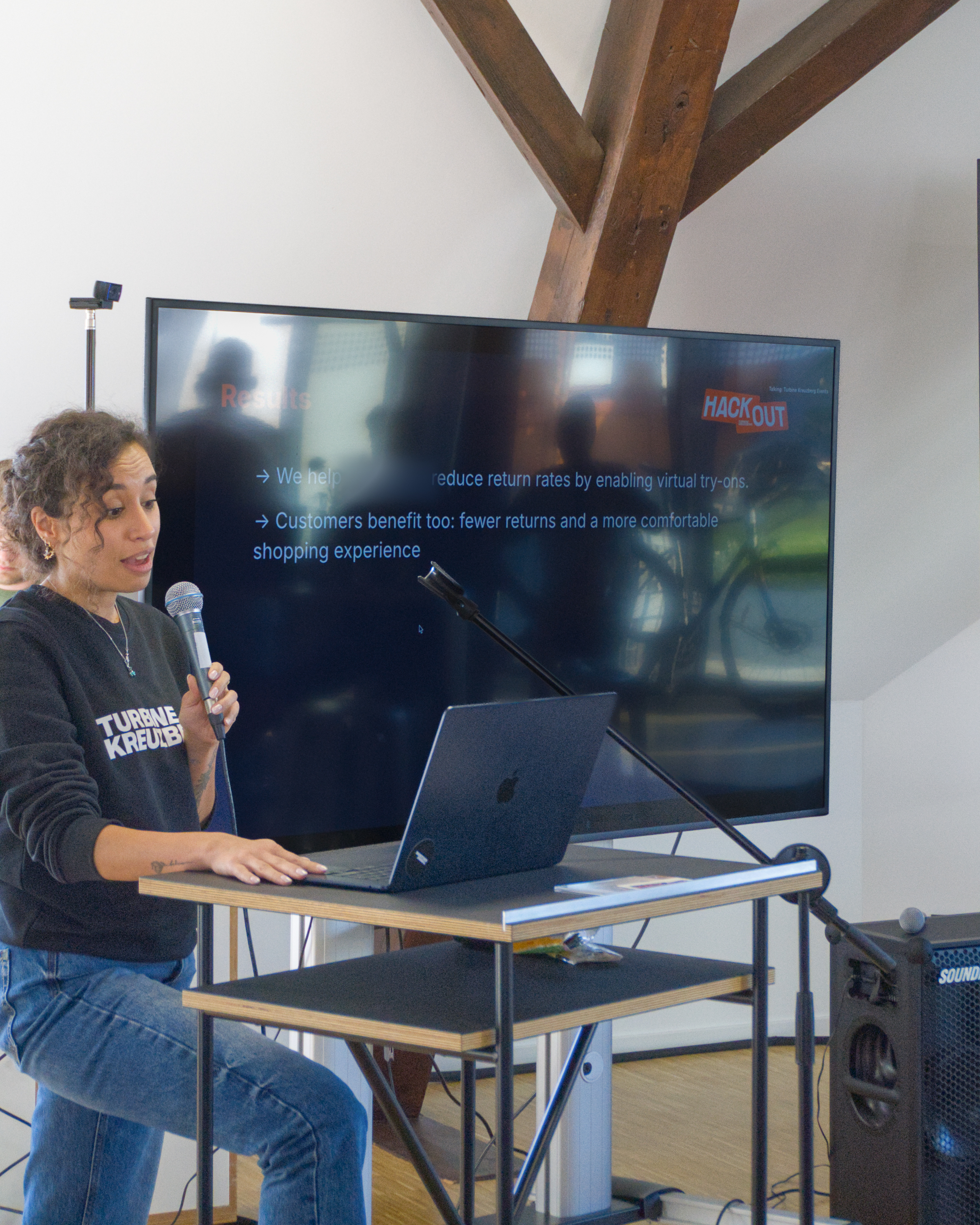
1. Try On Studio – an AI-powered virtual fitting room
We've all been there: you order clothes online, they get delivered, you try them on and they just don't fit like they do in the professional photos. So you send them back. The problem is that customers can only judge how the clothes actually look on them after they've been delivered. This results in high return rates in fashion e-commerce.
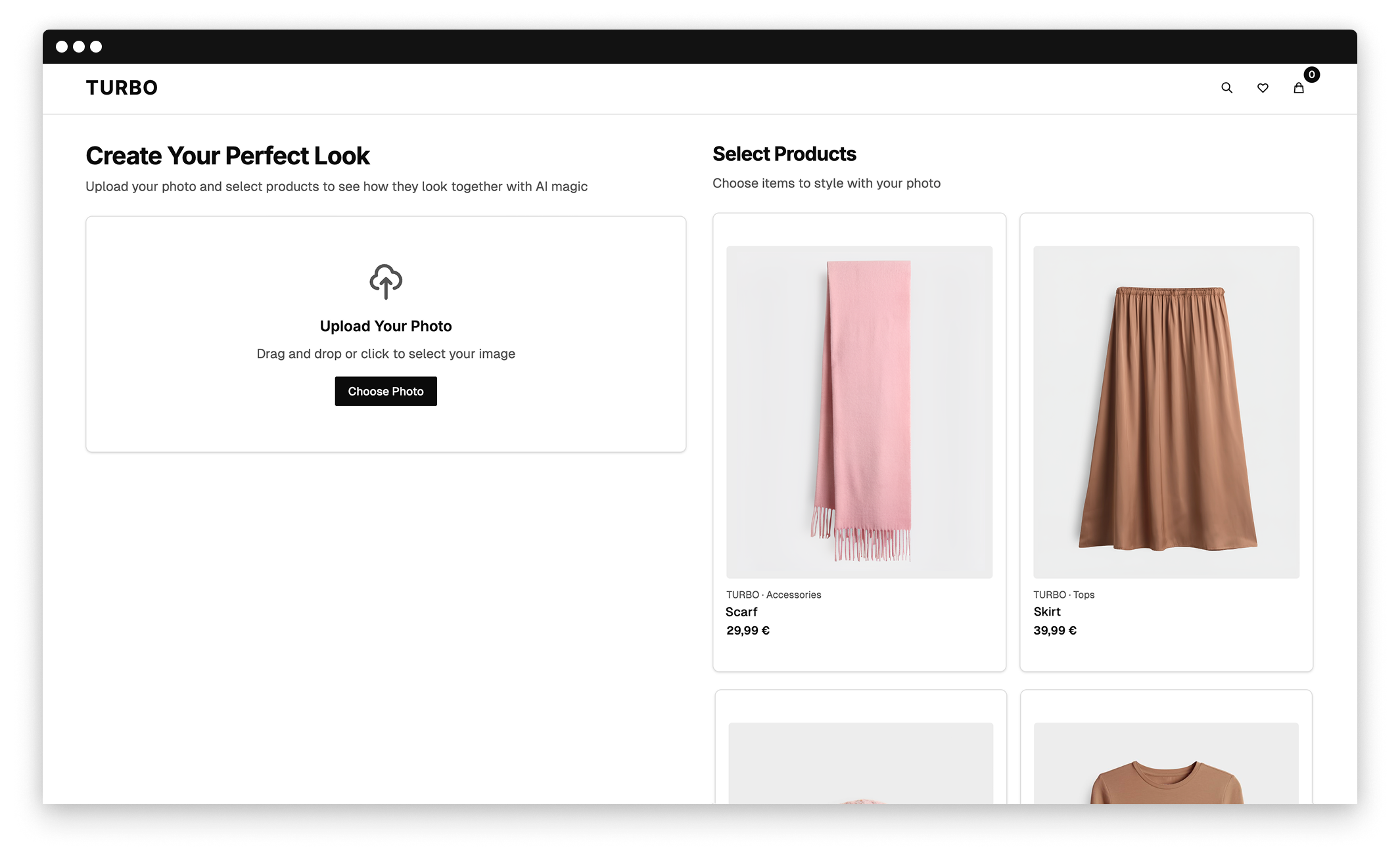
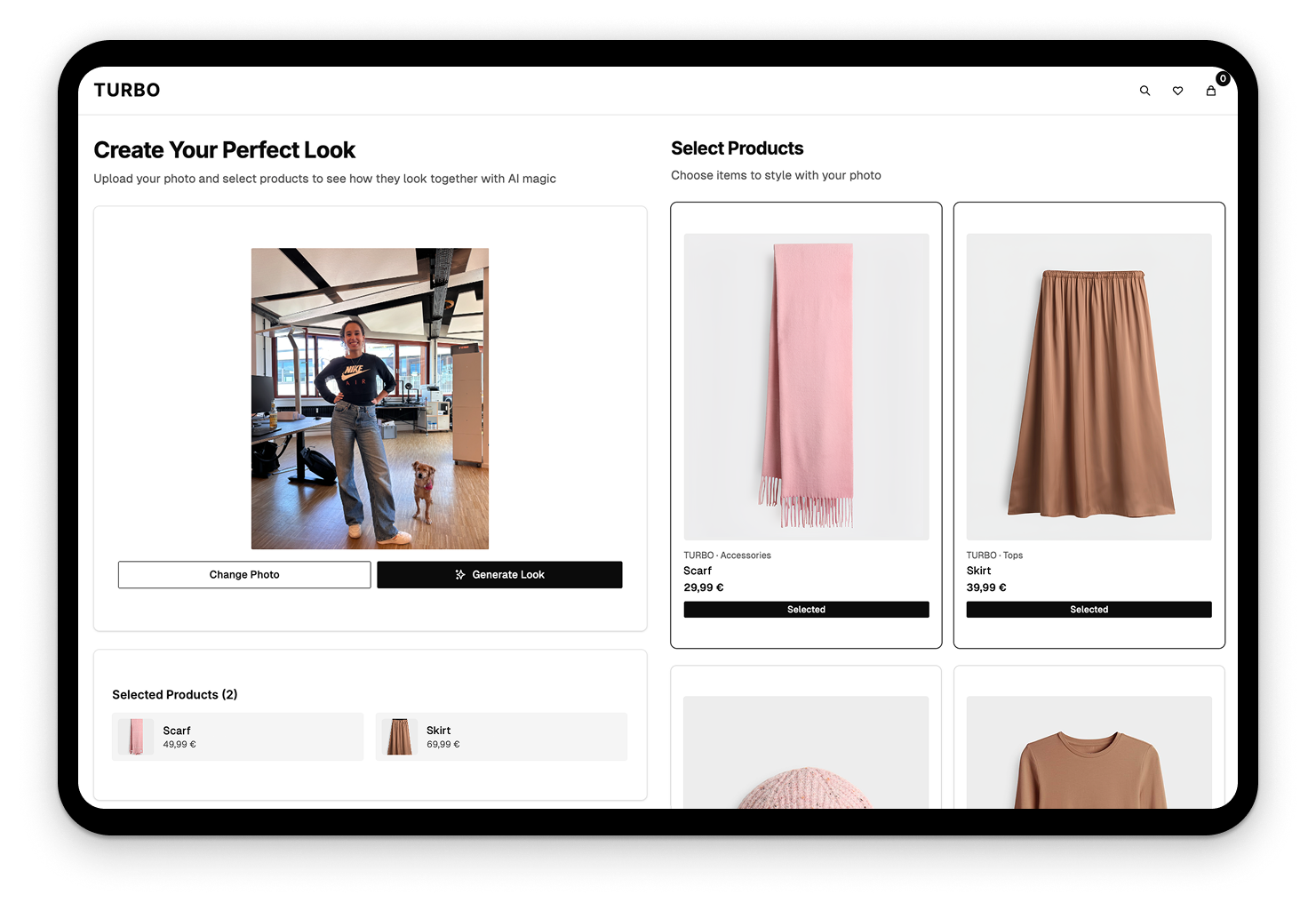
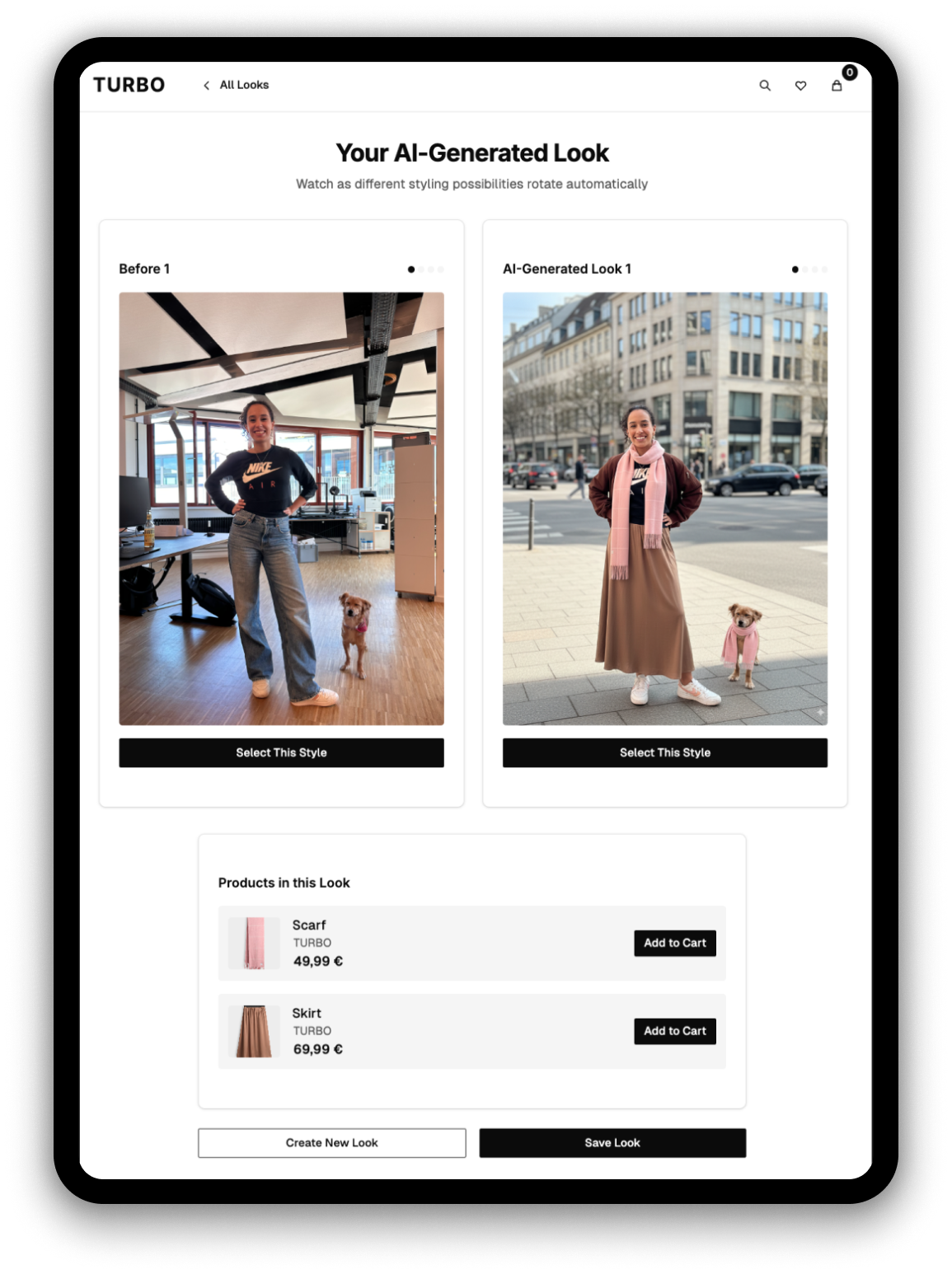
Our “Try On Studio” team has developed a solution to this problem using generative AI. Customers select one or more items and upload a photo of themselves. The AI combines the products with the image, enabling a virtual fitting. The result: customers can get a realistic idea of how the items will look before placing an order, without having to try them on in person or wait for delivery.
The Try On Studio team used Vercel's v0 to create a functional mock-up application in a very short time and with minimal development effort, which exemplifies the customer journey.
For the team, the hackout went according to the motto “so far, so good.” The biggest challenge was the image generation itself: although the AI exceeded expectations in terms of image quality, the products could not always be displayed 100% correctly and Gemini had difficulty reproducing people's faces accurately. To ensure the best possible quality nonetheless, image generation was carried out sequentially.
The Try On Studio team sees great potential for use in digital fashion retail. After all, every return costs money. Shipping, logistics, inspection, reconditioning - fashion retailers struggle with return rates between 20 and 50 percent. Virtual fittings can measurably reduce this rate. Fewer returns mean lower logistics costs, less capital tied up in returned goods and happier customers who order the right thing the first time. Rapid advances in AI image generators show that quality is continuously improving and increasingly meeting requirements. For the digital fashion retail industry, one thing is clear: virtual fittings are coming - it's only a matter of time.
2. PairSpark – intelligent team finding for developers
In most development teams, habitual “comfort pairings” tend to form – people work with the same individuals because it is familiar and efficient. However, these ingrained patterns limit collaboration, knowledge sharing, and innovation. It is only when colleagues are on vacation and teams have to reorganize that it becomes apparent that new pairings bring fresh perspectives and work surprisingly well. The hurdle is not a lack of willingness to change, but uncertainty: Who am I compatible with? Who can help me with my learning goals?
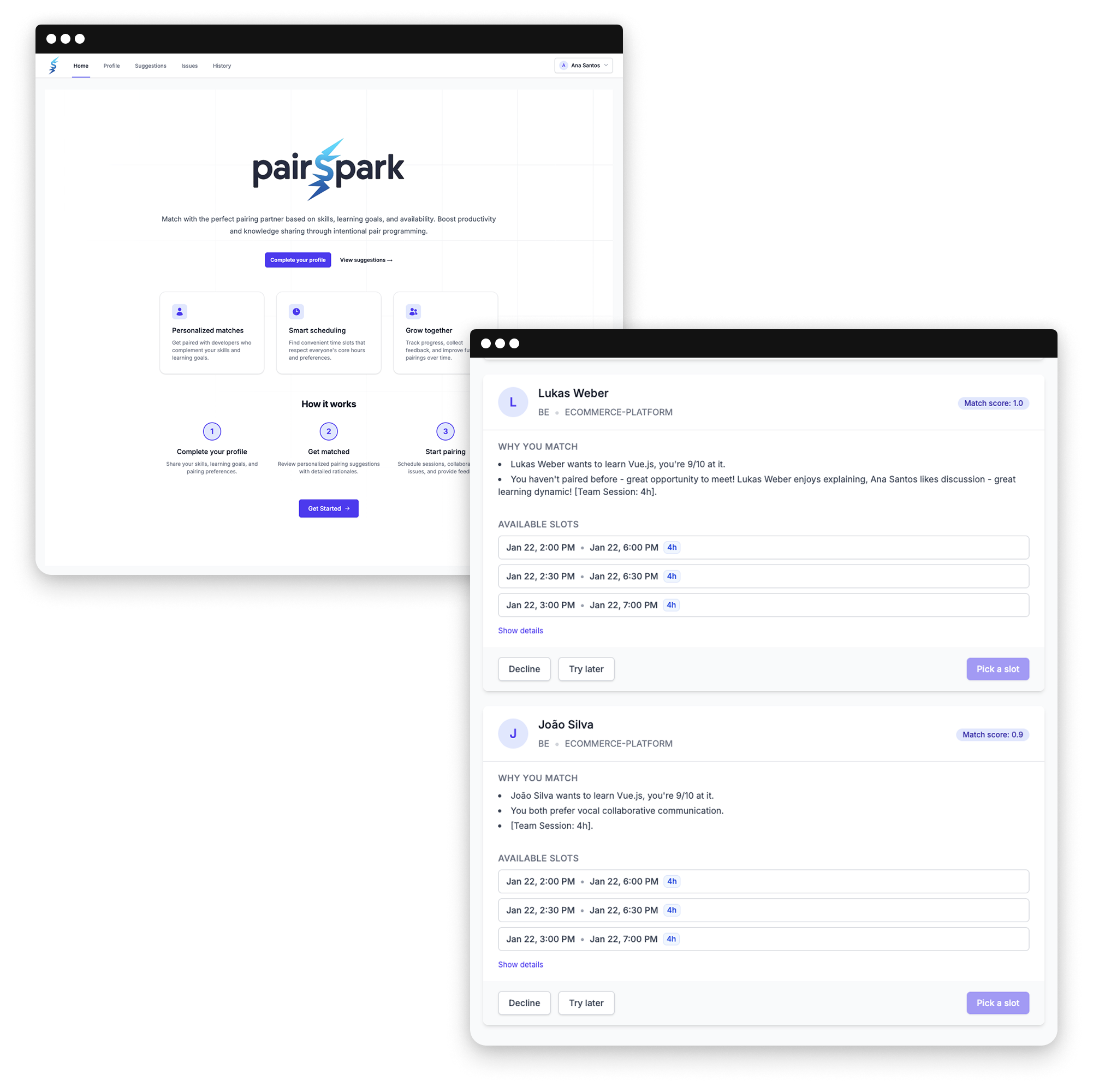
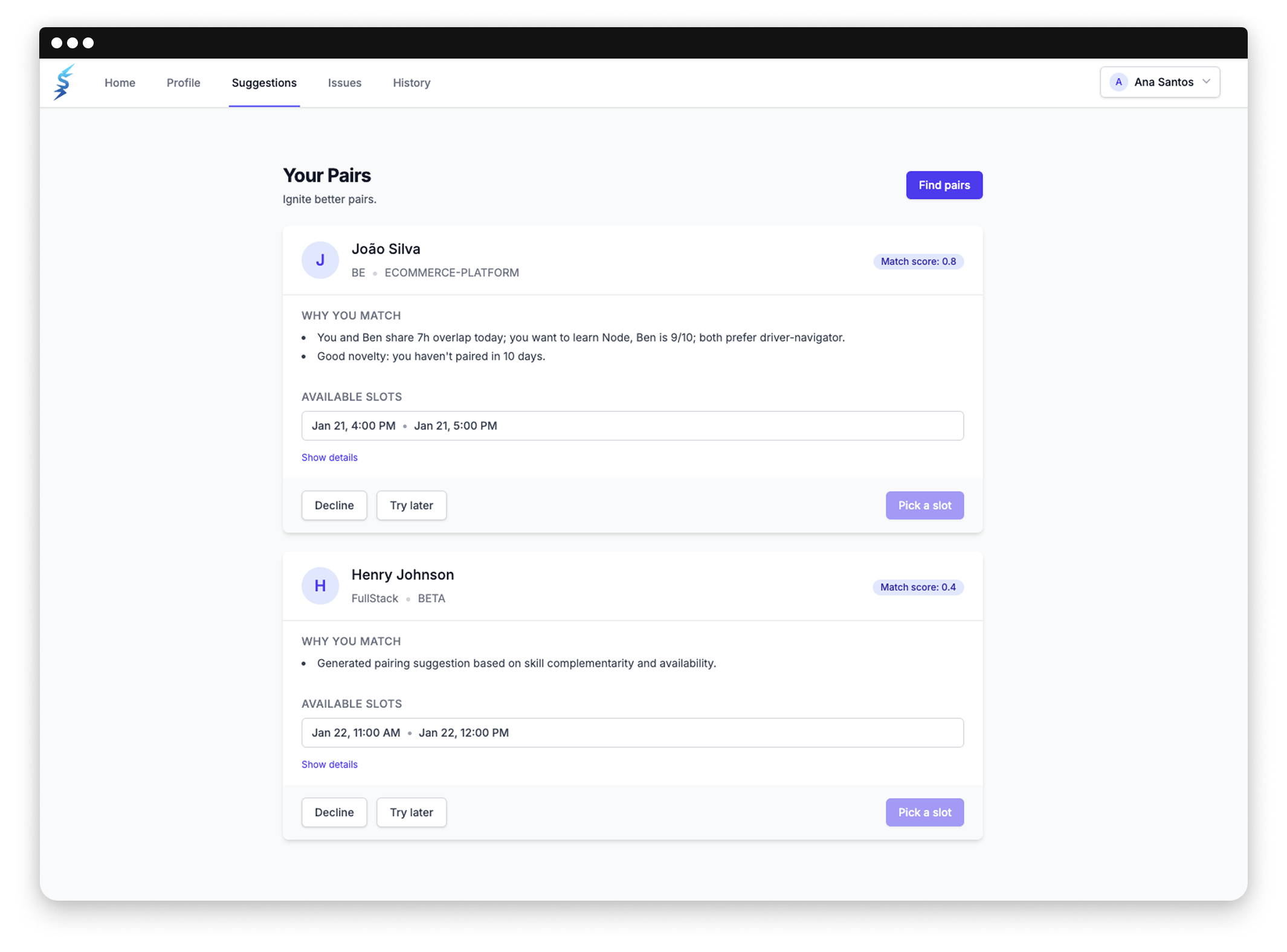
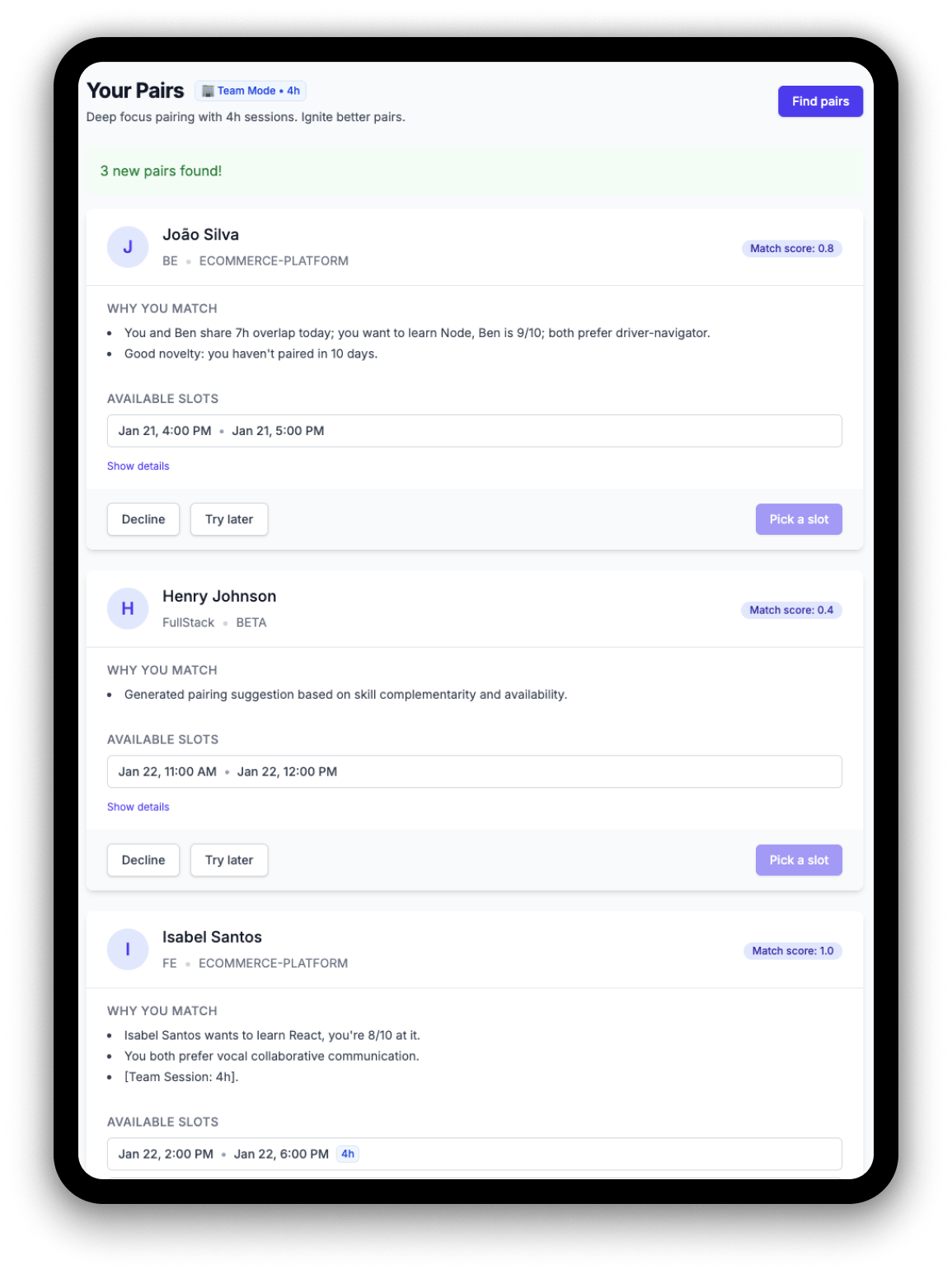
The “PairSpark” team developed an intelligent matching tool that brings developers together with ideal pairing partners. Users create a profile with their work preferences, technical skills, and learning goals. An algorithm analyzes these profiles and suggests suitable partners with specific reasons: “This person is proficient in the framework you want to learn” or “You have never worked together before, a chance for new inspiration.” Pairing sessions can be planned directly from the platform. The result: Intentional pairings become easier, more dynamic and promote a collaborative team culture.
The biggest challenge was designing the matching system. Originally, users were supposed to be able to freely express their preferences. In practice, however, it became apparent that free text cannot be matched effectively. The team developed a structured system with predefined options such as preferred working styles or technical areas of expertise. This adjustment significantly improved the quality of the matches. Another requirement was that the platform had to be accessible to both internal and external developers, as many teams work in a mixed environment.
PairSpark addresses knowledge silos and rigid working structures in development teams. Intelligent matching distributes expertise in a targeted manner, promotes innovation, and strengthens team dynamics. Instead of manual coordination, the tool takes over the data-based recommendation of suitable pairing partners, which is particularly valuable in mixed teams of internal and external developers.
Planned next steps include implementing Google OAuth for secure authentication, integrating with Jira for data-driven pairing recommendations based on open tickets and technologies used, and enhanced Slack notifications. In the long term, the tool will also support mob programming and enable dynamic group formation for sessions with three or more developers.
3. CRAG FTW – internal knowledge acquisition, including for non-technical teams
In software projects, knowledge is spread across numerous sources: code repositories, Git history, Jira tickets and Confluence documentation. Gathering project-relevant information from these different systems is a challenge for non-technical team members such as product owners, agile coaches, or sales teams. Even for developers, searching across multiple platforms is extremely time-consuming. This results in silos of knowledge, inefficient communication, and delayed decisions.
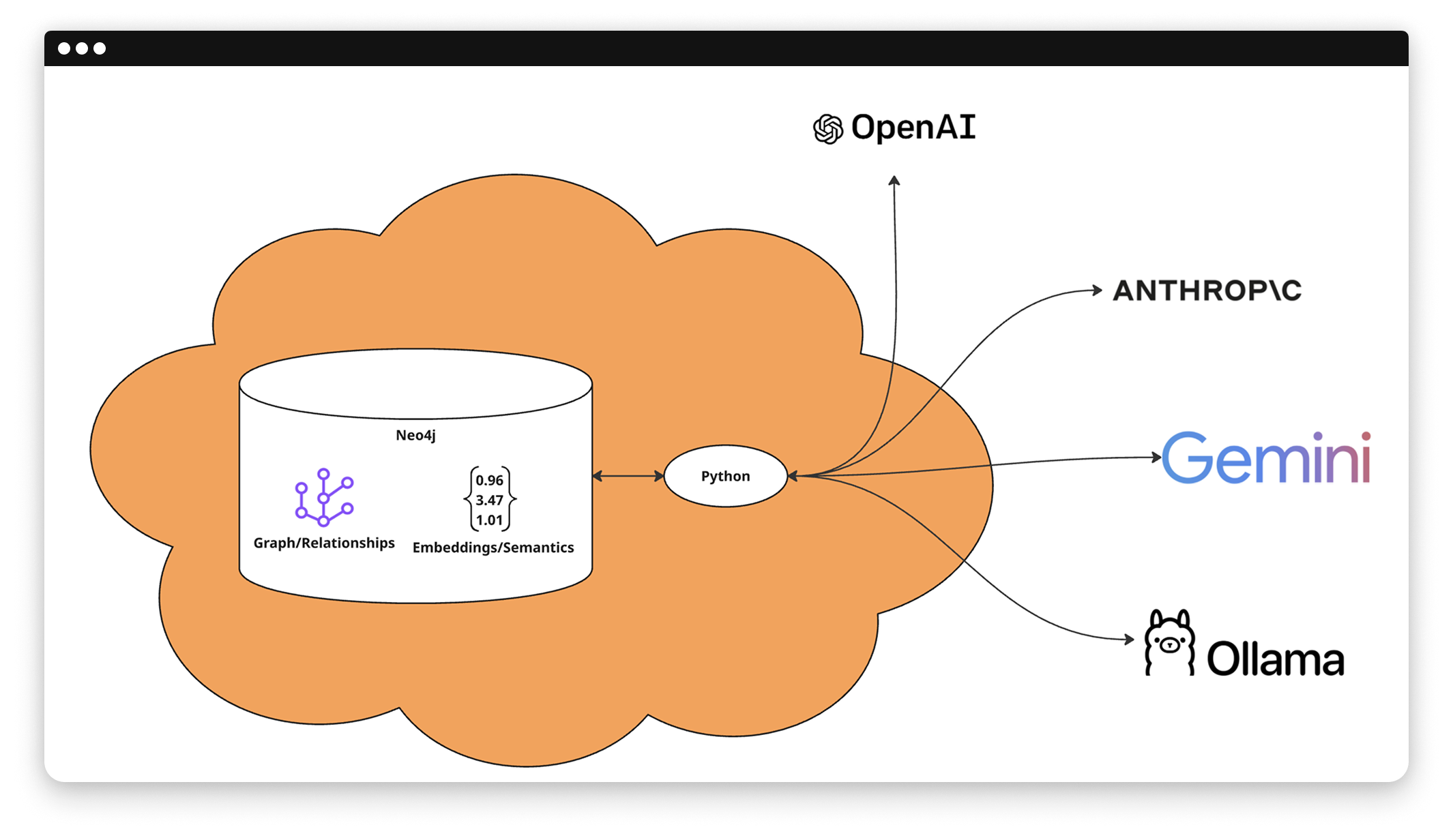
The "CRAG-FTW" team developed an intelligent knowledge database that combines information from source code repositories, Git history, Jira tickets and Confluence all accessible via an AI-powered assistant. CRAG stands for Corrective Retrieval Augmented Generation, an approach that works much more precisely than conventional RAG systems. What makes it special is that the system uses a graph database to identify connections between different data sources and provide context-related answers. A product owner can ask questions such as, “Which features were implemented in the last sprint and what technical dependencies exist?” without having to read code or navigate through dozens of tickets.
The biggest hurdle was OpenAI's API limitation when reading large amounts of data – especially during the hackout, when many users accessed the system at the same time. This slowed down the process considerably and made it prone to errors. Another challenge was that projects with very large ticket volumes are costly and time-consuming to process. The team worked on making the entire system transportable in a Docker container so that it could be used on a wide variety of operating systems. Despite these hurdles, the entire system works and is already easy to use.
CRAG FTW democratizes access to project knowledge. For the first time, non-technical team members get direct, understandable access to technical project information, without needing developers to translate it. This speeds up decision-making processes, improves communication between teams, and reduces dependencies. For sales teams, this means faster, more accurate responses to customer inquiries about project status. For product owners, it means informed decisions based on current technical conditions. The next steps include optimizing data processing for large projects, reducing API costs and bringing the system to full production readiness.



4. Turbine Translator AI – optimized app translations at the push of a button
Translating digital applications is time-consuming, error-prone and usually done manually. Developers and product managers have to maintain translation keys, coordinate different languages and ensure consistent terminology. Especially in multi-project environments or agencies with multiple clients, management quickly becomes confusing. Adding new languages often means manually creating hundreds of translations or hiring external service providers—both of which cost time and money.
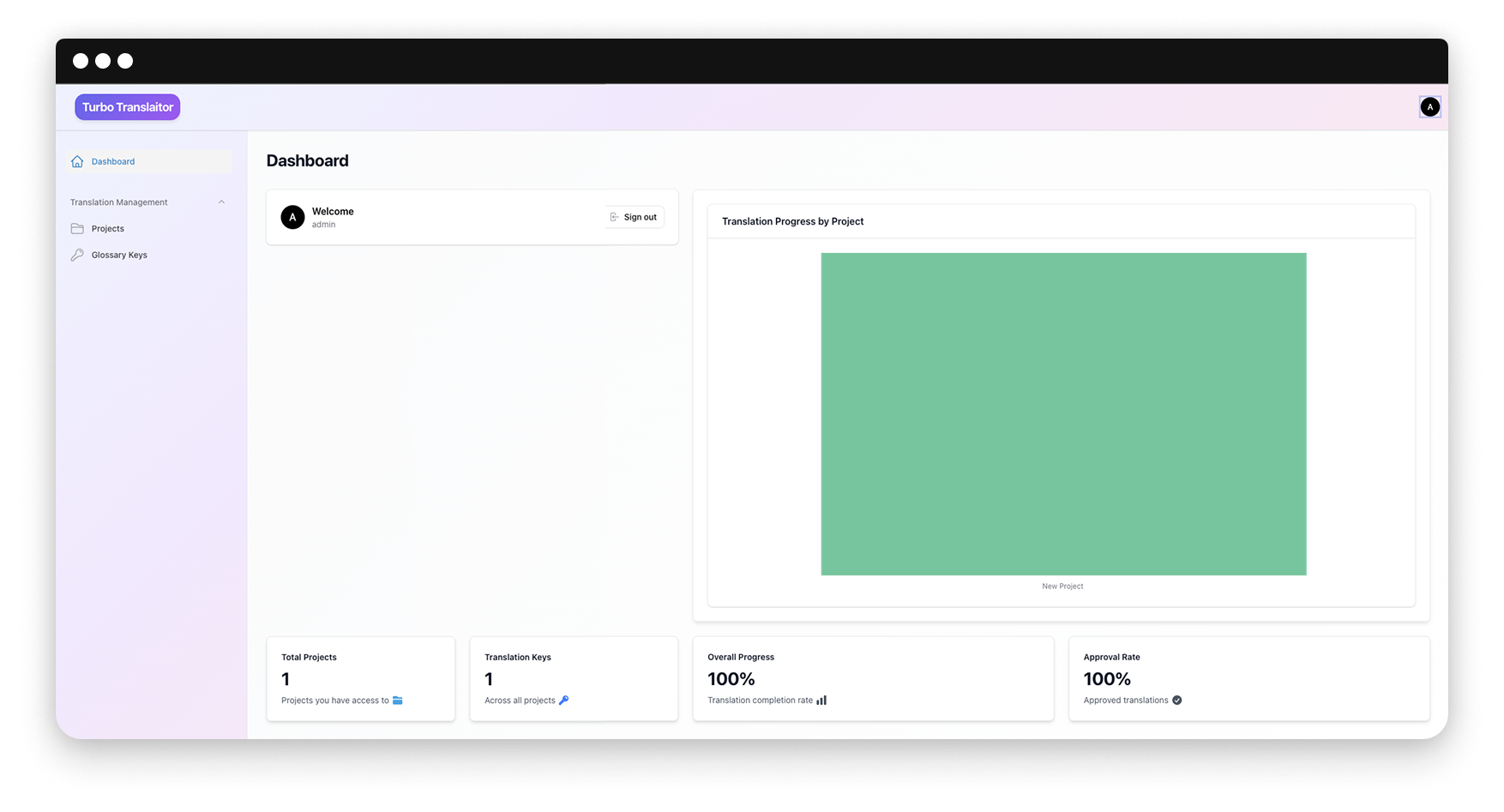
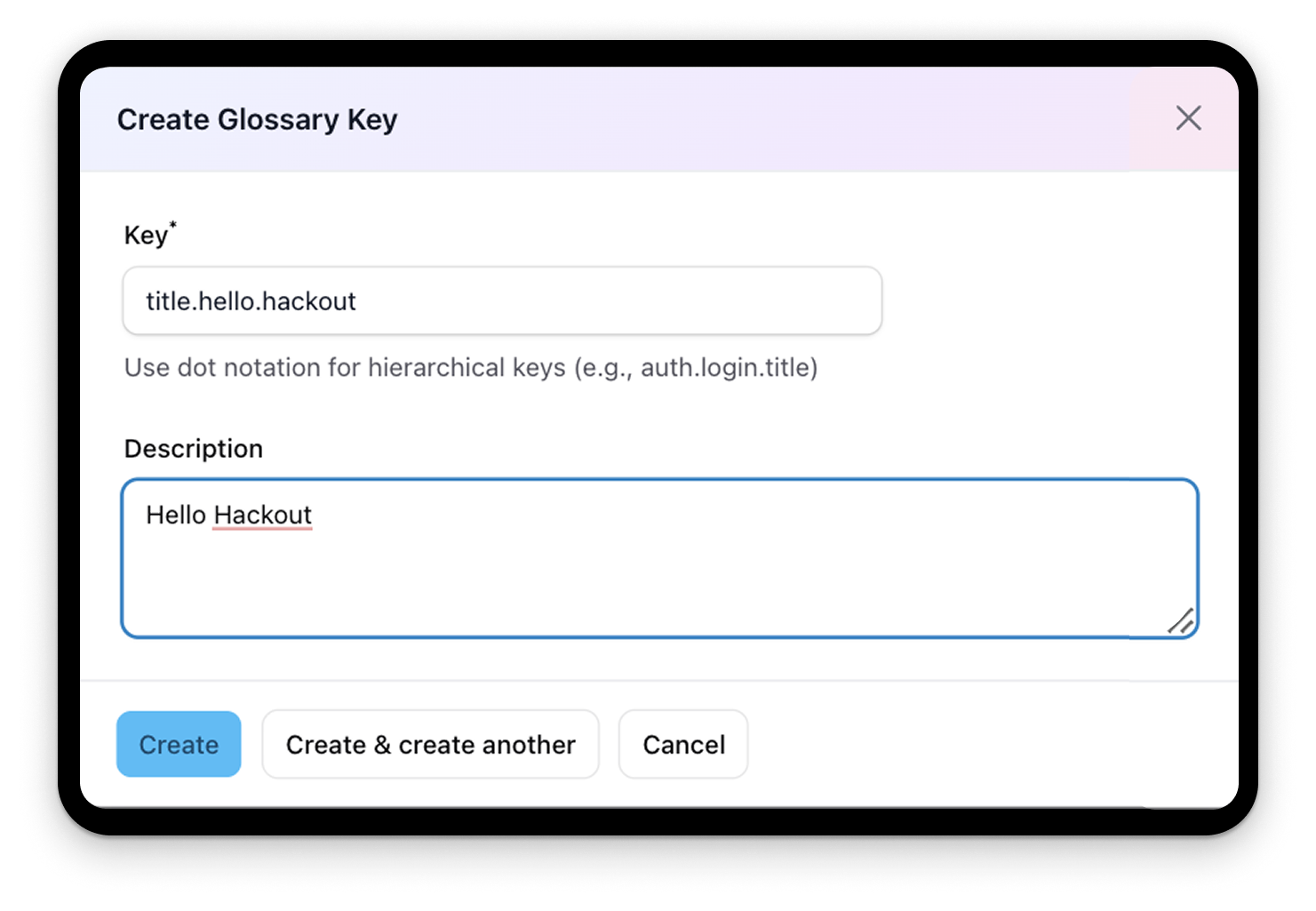
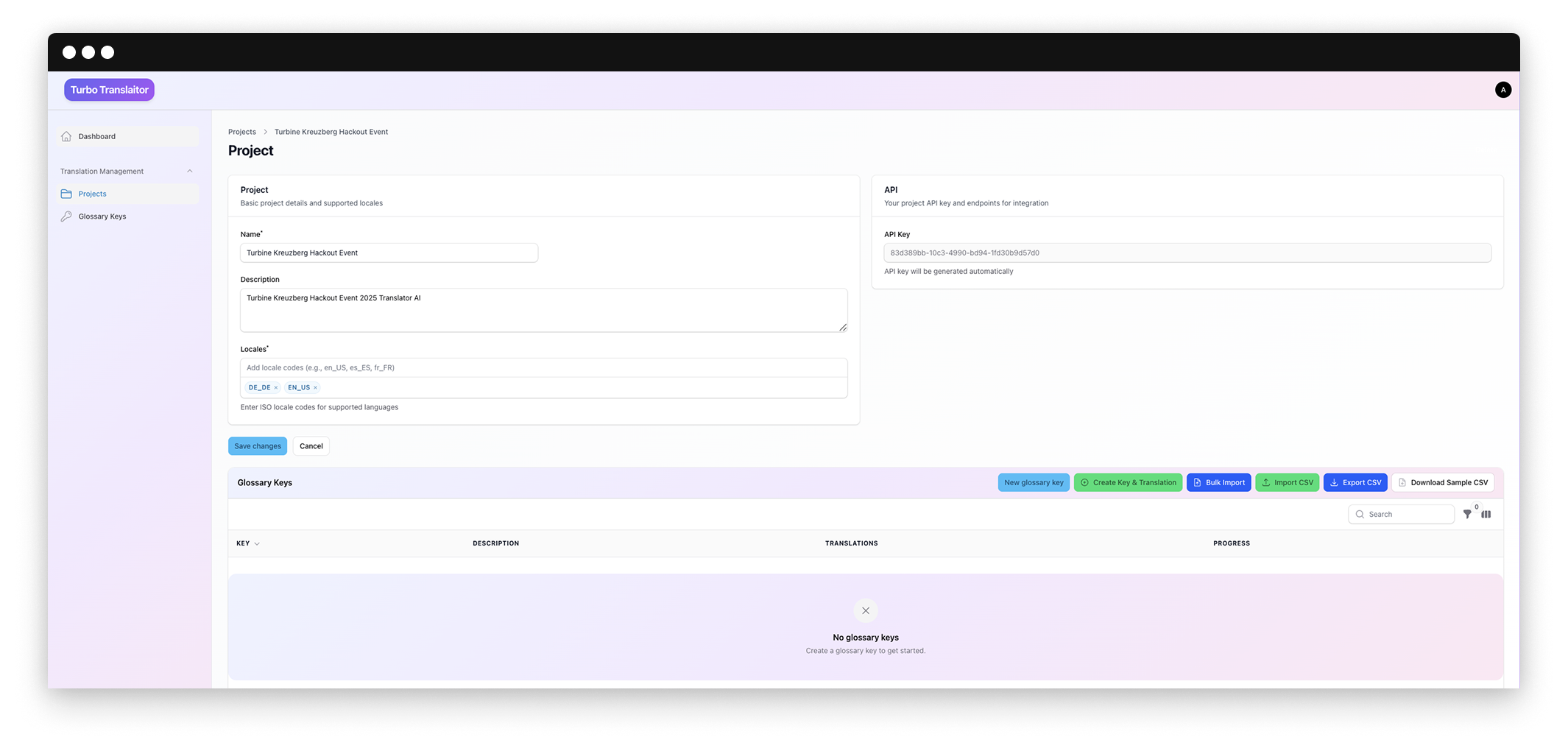
The "Turbine Translator AI" team developed a platform that automates the entire translation process. Users create “applications” within the platform, each with its own API token and configurable languages. Glossaries with translation keys are managed for each application—the AI translates these into all desired languages at the push of a button. What makes this special is that users can provide context for better AI results, manually edit translations and integrate them directly into their applications via an API. For example, a product catalog is created as a “product category” key and automatically translated into all configured languages – with complete versioning and diff comparison, a process for finding the differences between two files.
The biggest challenge was layout issues with Windsurf during code generation, as the accuracy of the AI suggestions sometimes fluctuated. The team had to make manual adjustments here. Another requirement was the implementation of an approval process: translations from Langdock must be able to be checked before release. The platform also does not function in isolation, but is designed for integration with other applications via API keys – this architecture required careful planning of data transfer and authentication.
Turbine Translator AI significantly speeds up project deliveries and reduces manual translation work to a minimum. Centralized management ensures consistent terminology across projects and languages. Particularly valuable: role-based access control makes the platform ideal for agencies with multiple clients. Developers benefit from easy API integration, while product managers benefit from quick adaptation of supported languages. Planned features include a widget for inline editing—to identify and edit translation keys directly in the application—as well as automatic checks for outdated translation keys that are no longer in use. With further feature enhancements, the platform is already ready for use in your own projects.
Our AI Tools












Result of the Hackout
Hackout 2025 showed that when innovation calls, we drop everything and start coding.
Within two days, several functional prototypes were created that address real-world problems: from return rates in the fashion industry to knowledge silos in development teams to manual translation processes.
What have we learned? AI-powered coding tools such as Cursor, Windsurf and Langdock greatly accelerate prototype development. What used to take weeks can now be done in days. At the same time, we have seen where AI still has its limitations today – in image generation, API limits, and the accuracy of generated code. And these insights are just as valuable as the prototypes themselves.
Hackout isn't just a way to familiarize ourselves with new technologies. It brings together colleagues from Berlin and Faro who have never worked on projects together before. New perspectives, fresh ideas, and direct exchange to implement innovative ideas—that's exactly why we value Hackout.
Ready for AI? So are we.
Let's talk ideas, challenges, needs, and solutions.

- Matthias Gronwald
- Co-CTO
- matthias.gronwald@turbinekreuzberg.com